Understanding Property Tax Incentives for Agriculture and Forestry
A landowner's guide to reducing property taxes through agricultural exemptions, forestry use valuation, and conservation easements. Learn how to qualify and keep your tax status.
Understanding Property Tax Incentives for Agriculture and Forestry
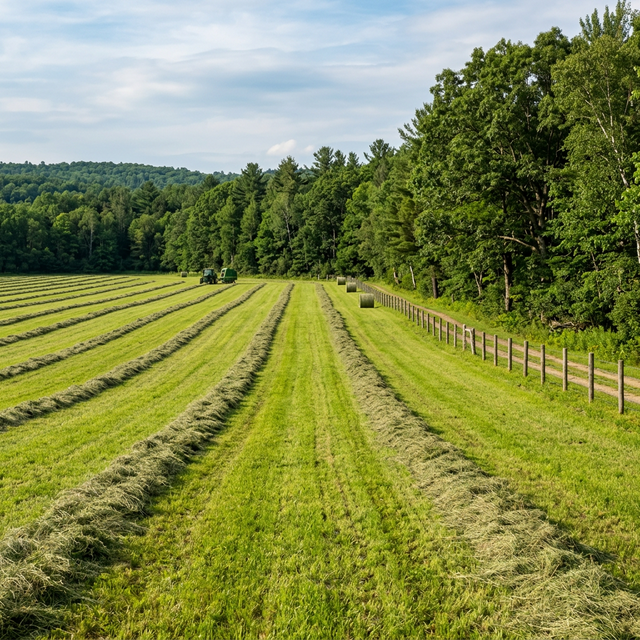
If you own 50 acres of land near a growing suburban area, the open-market value of that dirt might be $20,000 an acre. If the county tax assessor taxes you based on that "highest and best use" (meaning what a developer would pay to build a subdivision), your annual property tax bill could easily bankrupt a small farming or timber operation.
To prevent farmers and timber managers from being taxed off their land, every state in the U.S. has enacted some form of "Current Use Valuation" law.
These laws—commonly referred to as Ag Exemptions, Forestry Exemptions, or Greenbelt Laws—allow land to be taxed based on its agricultural or timber production value (often pennies on the dollar), rather than its commercial real estate value.
Here is what you need to know about qualifying for, applying for, and keeping these massive property tax incentives, and the devastating penalties if you mess them up.
1. The "Ag Exemption" (Agricultural Use Valuation)
First, a crucial point of terminology: It is rarely an actual "exemption." You still pay property taxes, but the land is valued at a much lower rate.
How It Works
Instead of calculating taxes based on the market value ($20,000/acre), the assessor calculates it based on the land's ability to generate agricultural income. A pasture capable of supporting one cow per five acres might be given an "Ag Value" of just $150 per acre. You then pay your local tax rate on that vastly reduced $150 assessed value.
How to Qualify (The "Bona Fide" Test)
You cannot simply buy a 20-acre lot, throw two pet goats on it, and claim an Ag Exemption. You must prove bona fide commercial agricultural use. While rules vary drastically by state (and even by county), the assessor generally looks at:
- Minimum Acreage: Many states require a minimum of 5 to 10 acres devoted exclusively to agriculture. (The one acre your house sits on is excluded and taxed at the full residential rate).
- Income Requirements: You often must prove the land generated a specific amount of gross agricultural income (e.g., $1,000 to $2,500/year) in three of the past five years. Receipts for hay sales, cattle auctions, or sweet corn stalls are required.
- Intensity of Use: If it is a pasture, is it fenced? Is it stocked with a herd large enough to be considered a business?
What Qualifies?
- Row crops (corn, soybeans)
- Grazing livestock (cattle, sheep, goats)
- Hay production
- Orchards and vineyards
- Sometimes: Beekeeping (Apiculture) or commercial equestrian boarding facilities (check local laws).
2. The Timber Exemption (Forestry Use Valuation)
If your land is heavily wooded, raising cattle is impossible. Fortunately, most states offer a parallel program for commercial timber production.
How It Works
Similar to the Ag Exemption, the land is valued based on the soil's ability to grow commercial timber (pine, oak, hickory) over decades. Because trees take 30 to 50 years to harvest, you do not have to show annual income, but you must prove you are actively managing the forest for an eventual commercial harvest.
How to Qualify
- Minimum Acreage: Usually 10 to 20 acres of contiguous forest.
- The Forest Management Plan: This is the critical requirement. You must hire a Registered Consulting Forester (or utilize a state agency forester) to write a detailed 10-year timber management plan. The plan dictates exactly when you will thin the trees, conduct prescribed burns, and execute the final harvest.
- Active Management: You must physically follow the plan. If the forester wrote that you must thin the pines in 2026, and you don't do it, the county tax assessor will revoke your exemption.
3. Wildlife Exemptions
In recent years, several progressive states (most notably Texas) have recognized that forcing landowners to run cattle or cut timber to save on taxes was terrible for wildlife.
A Wildlife Management Exemption allows you to keep the exact same low tax valuation as an Ag Exemption, but instead of producing cows or timber, you produce wildlife.
How to Qualify (Using Texas as the Model)
- You generally must already hold an Ag or Timber exemption to convert to a Wildlife exemption.
- You must actively perform at least three of seven qualifying practices every year:
- Habitat control (e.g., brush management)
- Erosion control
- Predator control (e.g., managing feral hogs or coyotes)
- Providing supplemental water
- Providing supplemental food
- Providing shelter (e.g., building brush piles and snags)
- Conducting census counts (using trail cameras or spotlight surveys)
You submit an annual report to the Chief Appraiser proving you completed the work.
4. Conservation Easements (The Permanent Solution)
If you have a large, pristine property and never intend for it to be developed, you can place a Conservation Easement on the land.
You sign a legally binding agreement with a land trust or government agency, permanently giving up the right to subdivide or commercially develop the property. You still own the land, farm it, hunt it, and can sell it—but the development restriction stays on the deed forever.
The Financial Incentive
Because you legally eliminated the property's development value, the market value plummets. This accomplishes two massive tax benefits:
- Income Tax Deduction: The IRS treats the lost value as a charitable donation, allowing massive federal income tax deductions.
- Estate Tax Relief: It significantly lowers the value of the land for inheritance purposes, making succession planning much easier and preventing your heirs from having to sell the farm just to pay the estate taxes.
The Danger: Rollback Taxes
If you buy land with an Ag/Timber exemption and decide to build a subdivision, or if you simply stop farming and let the fences fall down, the county assessor will revoke your valuation.
When this happens, you trigger a Rollback Tax (or "recapture penalty"). The county will calculate the difference between the low Ag taxes you paid and the high market-rate taxes you should have paid over the last 3 to 5 years (plus 5% to 7% interest)—and hand you a massive, retroactive tax bill.
Always confirm the tax status of a property before closing the purchase, and understand what it takes to maintain that status.
Summary
Navigating rural property taxes requires treating your land like a business. Whether you are running a commercial cow-calf operation, managing a loblolly pine plantation, or actively restoring native wildlife habitat, your state offers programs to keep your tax burden manageable. Contact your county tax assessor's office (or "Chief Appraiser") immediately after purchasing rural land to learn their specific acreage minimums, income requirements, and application deadlines (which are often strictly enforced in the early spring).
Explore more: Learn how a written 5-Year Land Management Plan provides the documentation county tax assessors love to see, or discover how USDA EQIP funding can help pay for the improvements necessary to qualify for a Wildlife Exemption.
Sources & Further Reading
- Texas Parks & Wildlife — Wildlife Management Valuation: tpwd.texas.gov
- Land Trust Alliance — Conservation Easements: landtrustalliance.org
- Penn State Extension — Clean and Green (Preferential Tax Assessment): extension.psu.edu
- The National Timber Tax Website: timbertax.org
- Local County Tax Assessor Websites — Always check your specific county's ".gov" website for local applications and deadlines.
Written by Mark Henderson, Rural Real Estate Specialist & Appraiser at LandHelp.info. Mark has 25 years of experience appraising agricultural and timber properties and advising landowners on estate planning and valuation programs.
Tags:
Mark Henderson
Rural Real Estate Specialist & Appraiser