How to Identify and Remove Common Invasive Plants on Private Land
A comprehensive guide to identifying and removing the most aggressive invasive plants on private land, including Tree of Heaven, Autumn Olive, and Japanese Honeysuckle.
How to Identify and Remove Common Invasive Plants on Private Land
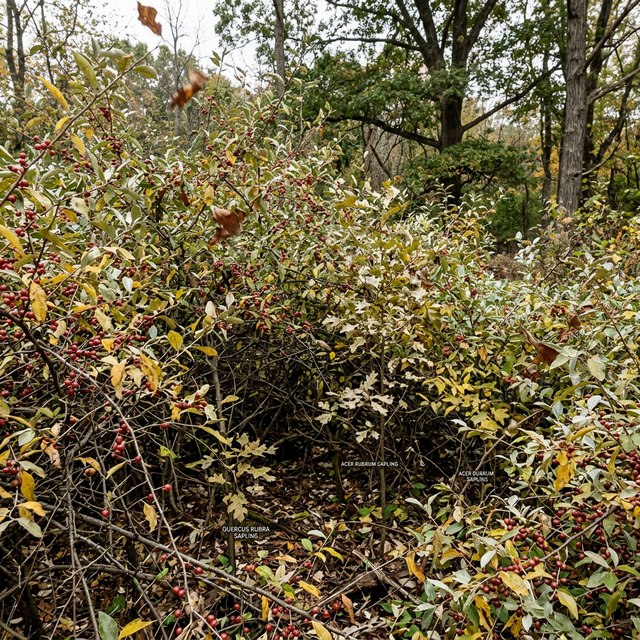
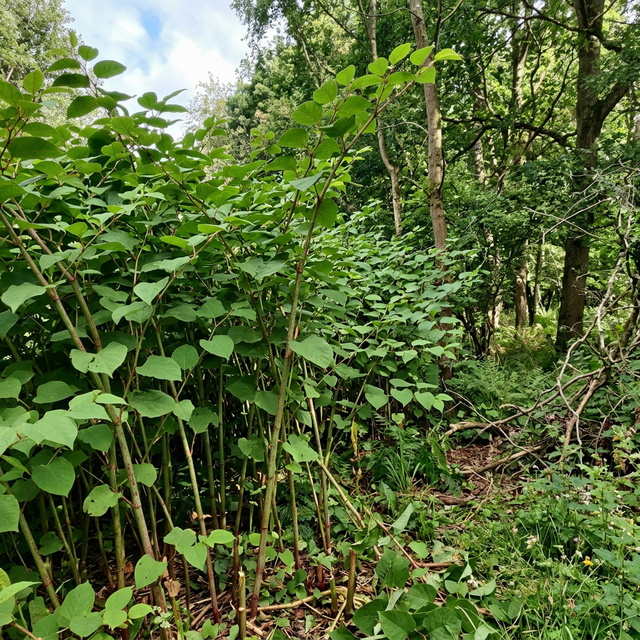
Invasive plants are the silent destroyers of private land. They don't arrive with a bang; they sneak into a fence row as a single bush, and five years later, they have formed an impenetrable thicket that has choked out the native timber, destroyed the wildlife habitat, and significantly reduced the property's recreational and agricultural value.
According to the U.S. Forest Service, invasive species cost the United States over $120 billion annually in damages and control costs. For the private landowner, ignoring an invasive plant issue simply guarantees a much more expensive problem tomorrow.
This guide focuses on identifying the three most aggressive woody invaders across much of the United States, and details the specific, proven methods to permanently eradicate them.
Why You Can't Just "Cut Them Down"
The biggest mistake landowners make with invasive woody plants—like Tree of Heaven, Autumn Olive, or Bush Honeysuckle—is simply cutting them down with a chainsaw or bush-hog and walking away.
These plants evolved to survive trauma. If you cut down an invasive tree without applying herbicide to the stump, the massive root system immediately sends up 10 to 50 new "root suckers." You haven't killed the tree; you have just made it angry, turning a single trunk into a multi-stemmed hydra.
Permanent removal requires the disciplined use of targeted herbicides, primarily Glyphosate (e.g., Roundup) or Triclopyr (e.g., Garlon, Crossbow), applied using specific techniques.
The 3 Essential Eradication Techniques
Before identifying the plants, you must understand how to kill them.
1. Cut-Stump Method (Best for large trees or sparse bushes)
- How it works: Cut the tree or bush down as close to the ground as possible. Within 15 minutes of making the cut, paint or spray a concentrated systemic herbicide (usually 20–50% Glyphosate or Triclopyr) directly onto the outer ring (the cambium layer) of the freshly cut stump.
- Why it works: The dying stump sucks the herbicide down into the root system, preventing the tree from root-suckering.
2. Hack-and-Squirt (Best for large trees you want to leave standing)
- How it works: Use a hatchet to make downward-angled, overlapping cuts (hacks) completely around the trunk of the standing tree, cutting through the bark and into the sapwood. Immediately squirt 1–2 milliliters of concentrated herbicide into the "cup" of the hack.
- Why it works: The tree pulls the chemical down, dies standing (becoming a great wildlife snag), and prevents a tangled mess of downed trees on the forest floor.
3. Foliar Spray (Best for small, dense infestations under 6 feet tall)
- How it works: Mix a lower concentration (2–5%) of herbicide with water and a surfactant, and spray the leaves until they are wet but not dripping.
- Why it works: Easiest application method, but carries the highest risk of "drift" killing beneficial native plants nearby. Late summer or early fall is the best time, as the plant is actively pulling nutrients down to its roots for winter.
Target 1: Tree of Heaven (Ailanthus altissima)
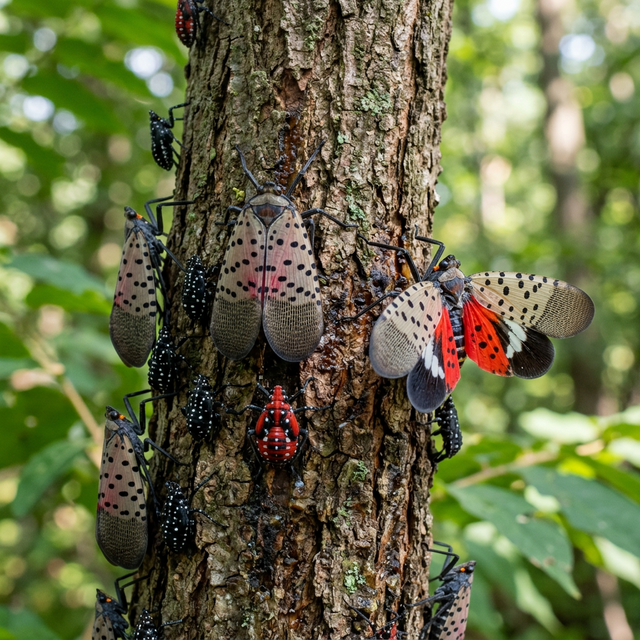
Perhaps the most aggressive and damaging invasive tree in North America. It produces a chemical (ailanthone) that suppresses the growth of other plants around it, and it is the primary host for the destructive Spotted Lanternfly.
How to Identify:
- Leaves: Long, compound leaves (1–4 feet long) with 10–40 leaflets. Looks slightly like native Black Walnut or Sumac.
- The "Tell": Crush a leaf. Tree of Heaven smells distinctly of rancid peanut butter or burnt rubber. Native look-alikes do not smell like this.
- Bark: Smooth, pale gray, resembling the skin of a cantaloupe.
How to Kill It:
- Never cut it down without herbicide. It will aggressively root-sucker for dozens of yards in every direction.
- Best method: Hack-and-squirt using Triclopyr from mid-summer through early fall. Leave the tree standing until completely dead (usually the following year), then it is safe to fell.
Target 2: Autumn Olive (Elaeagnus umbellata)
Originally planted in the 1960s and 70s by state agencies for wildlife cover, this aggressive shrub quickly escaped captivity and now ruins millions of acres of pasture and woodland edges across the East and Midwest.
How to Identify:
- Leaves: The underside of the leaf is covered in silvery scales. When the wind blows, an Autumn Olive thicket shimmers silver.
- Fruit: Produces massive quantities of small red berries speckled with silver dots in late summer.
- Form: Dense, multi-stemmed shrub growing up to 20 feet tall.
How to Kill It:
- Small bushes: Foliar spray with Triclopyr or a Glyphosate/Triclopyr mix in late summer.
- Large bushes: Cut-stump method. Cut it with a chainsaw or heavy brush cutter, and immediately paint the stump with concentrated herbicide. Follow up the next year with a foliar spray on the inevitable small root suckers.
Target 3: Bush Honeysuckles (Lonicera maackii, L. morrowii)
These Asian imports leaf out earlier in the spring and hold their leaves later in the fall than native trees. This dense shade completely suppresses the germination of native oak and hickory seedlings, halting forest regeneration.
How to Identify:
- Leaves: Simple, oval leaves that are directly opposite each other on the stem.
- The "Tell": Cut a mature stem in half. Invasive honeysuckles almost always have a hollow, brown pith (center of the stem). Native honeysuckles have a solid white pith.
- Flowers/Berries: Fragrant white to yellow tubular flowers in spring; bright red berries in pairs along the stem in fall.
How to Kill It:
- Best method: Foliar spray with Glyphosate in late fall. Because honeysuckle holds its green leaves weeks later than native trees (often into November), you can safely spray the honeysuckle leaves after the native trees have gone dormant and dropped their leaves, avoiding collateral damage.
- Larger plants: Cut-stump method is highly effective in fall and winter.
The Economics of Eradication (Get USDA Help)
Removing dense invasive brush is backbreaking, expensive work. Fortunately, it is also a massive priority for the USDA Natural Resources Conservation Service (NRCS).
Through the EQIP program, the NRCS offers substantial cost-share funding to private landowners under the Brush Management (Practice 314) standard. If you have significant acres of Autumn Olive, Honeysuckle, or Tree of Heaven, the NRCS will literally pay a portion of the cost for you to hire a professional forestry mulching and herbicide applicator.
Check with your local NRCS service center before you begin cutting; you cannot get funding for work you have already completed.
Summary
Invasive plant management is a marathon, not a sprint. The "cut and walk away" method does not work; it only multiplies the problem. Proper identification, targeted herbicide application during the late summer and fall (via cut-stump, hack-and-squirt, or foliar spray), and persistent follow-up the next year are required to reclaim your land. Do not let these silent destroyers rob your property of its timber, wildlife, and aesthetic value.
Explore more: Learn how to access funding for your eradication efforts in our Conservation Programs & Funding section, or discover how Biological Control can help manage large-scale infestations.
Sources & Further Reading
- US Forest Service — Invasive Species Profiles: fs.usda.gov
- Penn State Extension — Tree of Heaven Identification and Control: extension.psu.edu
- University of Maryland Extension — Invasive Plant Management: extension.umd.edu
- Midwest Invasive Plant Network (MIPN): mipn.org
- USDA Plants Database: plants.usda.gov
- NRCS Conservation Practice Standard 314 (Brush Management): nrcs.usda.gov
Written by Dr. Sarah Mitchell, Senior Editor & Land Management Specialist at LandHelp.info. Dr. Mitchell has extensive experience in invasive species eradication and ecological restoration, working continuously with landowners to secure USDA funding for property reclamation.
Tags:
Dr. Sarah Mitchell
Senior Editor & Land Management Specialist
Dr. Mitchell has over 20 years of experience in natural resource management, with expertise in sustainable agriculture and forest stewardship. She holds a Ph.D. in Natural Resource Management from Colorado State University and has worked with the USDA NRCS for 15 years.