Managing Edge Habitat: Turning Fence Lines and Corners into Wildlife Superhighways
Discover the ecological power of transition zones. Learn how to manage 'edge habitat' to boost wildlife populations, support pollinators, and improve property health.
Managing Edge Habitat: Turning Fence Lines and Corners into Wildlife Superhighways
If you ask a traditional farmer to describe a messy property, they might point to brushy, overgrown fence lines and the tangled, scrubby transition zones where a pasture meets the woods. For decades, the aesthetic of "good land management" was defined by razor-sharp mowing right up to the base of mature trees.
But to a wildlife biologist, that perfectly mown edge is a biological desert.
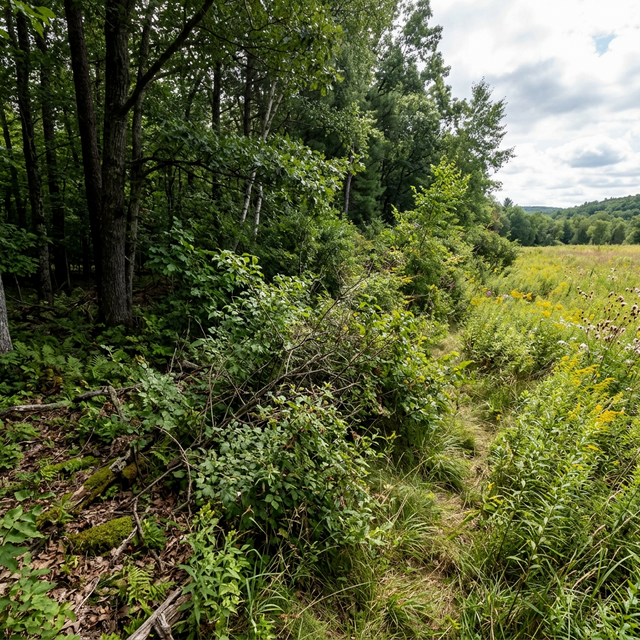
The greatest density and diversity of wildlife on your property is found where two different habitats meet—the "edge" (scientifically known as an ecotone). Where forest transitions into field, you get the nesting security of the woods combined with the massive food resources of the sunlit pasture. However, "hard edges" (a sharp transition from mowed grass to 50-foot tall trees) offer little protection. By actively managing these borders, you can soften the transition, turning sterile fence lines into ecological superhighways for deer, turkey, quail, and pollinators.
1. What is Soft Edge Habitat?
Think of edge habitat as a staircase. A hard edge drops from a 60-foot forest canopy directly down to 3-inch pasture grass. A soft (feathered) edge transitions gradually: from tall timber, down to 15-foot understory trees, down to 6-foot thorny shrubs and briars, and finally down to tall native grasses and wildflowers before reaching the pasture.
Why Wildlife Loves the "Mess"
- Security Cover: Turkeys, quail, and rabbits require dense, tangled ground-level vegetation to hide from hawks and foxes. You cannot hide a nest in short grass or under the open, shaded canopy of a mature oak forest.
- Abundant Forage: Sunlight hitting the ground allows broadleaf plants (forbs), briars, and fruiting shrubs to explode with growth. This provides massive volumes of seeds, berries, and high-protein insect life crucial for raising young birds.
- Corridors: Wildlife prefers to travel under cover. Thick, brushy fence lines connect disparate blocks of timber, creating safe travel corridors ("superhighways") across otherwise open, exposed landscapes.
2. Edge Feathering: Softening the Border
To create dynamic transition zones, you must actively "feather" your forest edges. You are intentionally creating a 30- to 50-foot wide band of staged, messy growth between the field and the deep woods.
1. Hinge-Cutting Non-Timber Species
Walk 30 feet into the woods from the field edge. Identify non-commercial, low-value trees (like elm, boxelder, or invasive species). Instead of cutting them completely down, cut halfway through the trunk and push the tree over so it falls toward the field (hinge-cutting).
- The tree remains alive, sending up leaves along the horizontal trunk, creating instantaneous, dense ground-level cover that deer will use for bedding and browsing for years.
2. Daylight the Ground
By removing some of the canopy along the edge (via hinge-cutting or firewood harvesting), sunlight instantly hits the forest floor. Within one growing season, dormant native seed banks of blackberries, pokeweed, and native grasses will aggressively sprout up.
3. Plant Native Shrubs
If the native seed bank is depleted, actively plant robust, fruit-bearing shrubs in the 15-foot zone closest to the field. Excellent choices include American Plum, Elderberry, Silky Dogwood, and native Viburnums. Avoid invasive species like Autumn Olive or Multiflora Rose at all costs.
3. Managing Fence Lines and Field Corners
You don't just need borders between woods and fields; you can create mid-field edge habitat by changing how you manage the areas where a tractor is hard to turn around.
Stop Mowing the Corners
Farm tractors create rounded corners in square fields. The small, triangular scraps of land left in the corners of fences are often mowed purely for aesthetic reasons. Let them grow up!
- Stop mowing these corners entirely, or only mow them once every three years in late winter. They will quickly fill with goldenrod, milkweed, and briars, creating perfect "coveys" for upland gamebirds in the middle of vast agricultural expanses.
The "Sloppy" Fence Line
A fence separating two pastures doesn't need to be manicured turf. Allow a 10-foot strip of vegetation to grow up thick along the fence wire. This provides crucial shade for livestock, acts as a windbreak, and gives pollinators safe harbor crossing the farm.
4. Maintenance and Funding
Edge habitat is a "successional" ecosystem; if you ignore it for 10 years, the shrubs will grow back into tall trees, and you are back to a hard edge.
- Maintenance: You must use a forestry mulcher, chainsaw, or prescribed fire every 3 to 5 years to "set back succession" and keep the vegetation low, brushy, and dense.
- Funding: The USDA NRCS heavily incentivizes edge feathering (Practice Code 645 - Upland Wildlife Habitat Management) and establishing field borders (Practice Code 386). Often, you can get paid by the state or federal government to let these areas grow wild and conduct the occasional chainsaw maintenance.
5. Summary and Next Steps
The quickest and cheapest way to drastically increase the wildlife carrying capacity of your property is to embrace "the mess." By softening the hard transitions between timber and pasture and allowing fence lines to grow thick, you provide the critical food and security cover that species require to survive.
Action Steps:
- Identify a sharp, hard edge on your property where towering woods abruptly meet a mowed field.
- Formulate a plan to hinge-cut a 30-foot strip of low-value trees along that border this coming winter.
- Stop mowing your field corners immediately and observe what native plants emerge next summer.
To learn more about actively planting specific species in these transition zones, review our guide on Creating Pollinator Habitat or explore broader forestry techniques in Thinning Your Woods.
Sources & Further Reading
- National Deer Association (NDA) - Edge Feathering Explained: deerassociation.com
- USDA Natural Resources Conservation Service - Upland Wildlife Habitat Management (Code 645): nrcs.usda.gov
- Quail Forever / Pheasants Forever - Field Borders for Wildlife: quailforever.org
- Penn State Extension - Managing Edges for Wildlife: extension.psu.edu
Written by Maria Rodriguez, Wildlife Biologist & Conservation Programs Advisor at LandHelp.info. Maria works extensively with landowners to access federal conservation funding for habitat restoration projects on private lands.
Tags:

Maria Rodriguez
Wildlife Biologist & Conservation Programs Advisor
Maria specializes in wildlife habitat improvement and navigating conservation incentive programs. She has helped hundreds of landowners access NRCS programs and improve habitat on their properties.