Japanese Knotweed, Giant Hogweed, & Tree-of-Heaven: 2026 Update on Control Methods
The definitive 2026 guide for landowners on eradicating the three most destructive terrestrial invasive plants in North America using mechanical and chemical methods.
Japanese Knotweed, Giant Hogweed, & Tree-of-Heaven: 2026 Update on Control Methods
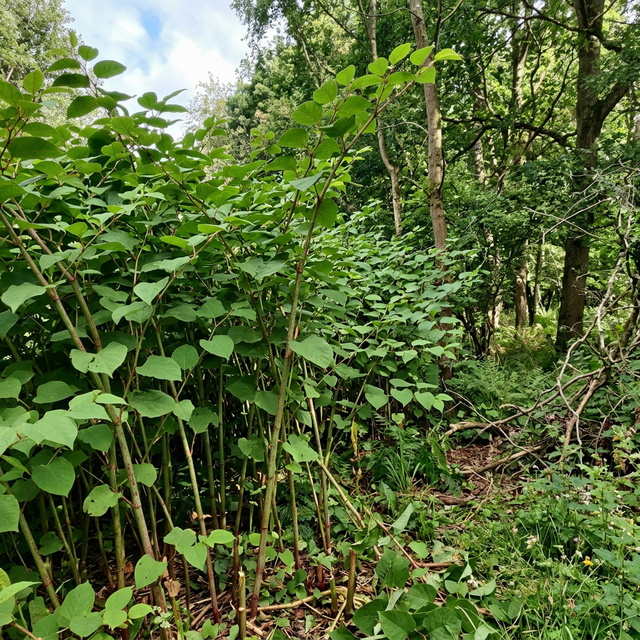
Managing invasive plants on private land often feels like a losing battle. However, there is a distinct difference between "annoying" weeds (like multiflora rose) and "ecological bulldozers." In 2026, three terrestrial plants demand an immediate, aggressive response if you find them on your property: Japanese Knotweed, Giant Hogweed, and Tree-of-Heaven (Ailanthus).
Ignoring these plants is not an option. Knotweed will physically destroy building foundations and stream banks. Giant Hogweed poses a severe threat to human health, causing third-degree chemical burns. Tree-of-Heaven secretes toxins into the soil, killing surrounding native trees, and serves as the primary host for the devastating Spotted Lanternfly.
Why is an updated guide necessary? Because the traditional advice of "just chop it down" actively makes these three specific plants multiply. In 2026, university research has refined the exact timing and chemical formulations required to achieve true root-kill. Here is your definitive action plan.
1. Japanese Knotweed (Fallopia japonica)
Knotweed resembles bamboo, growing up to 10 feet tall in dense thickets, primarily along waterways and disturbed soil. It has massive underground rhizome networks that can lay dormant for decades.
The Fatal Mistake
Never cut or mow knotweed in the spring or summer without follow-up. Mowing stimulates the rhizome to send up ten new shoots for every one you cut. Furthermore, a fingernail-sized fragment of the stem dropped in the dirt can sprout a brand-new colony.
The 2026 Control Protocol
To kill knotweed, you must starve the massive root system. The most effective, scientifically proven method is the "Late Summer Window."
- Early Summer (June): Cut the knotweed stalks entirely to the ground. Let the cut stalks dry completely on a tarp (do not compost or move them to prevent spreading). The plant will angrily expend massive root energy to regrow.
- Late Summer/Early Fall (September): Wait until the regrowth is 3-6 feet tall and the plant is actively preparing for winter by sending starches down into its roots.
- Chemical Application: Apply a foliar spray of a forestry-grade aquatic-approved Glyphosate (like Rodeo or AquaNeat) at a 5% to 8% concentration (always follow label rates exactly), mixed with a non-ionic surfactant. Because the plant is pulling nutrients downward for winter, it pulls the herbicide directly into the deep rhizomes, achieving root-kill. Expect a three-year process.
2. Giant Hogweed (Heracleum mantegazzianum)
Giant Hogweed looks like Queen Anne’s Lace on steroids, soaring 10-15 feet high with massive, umbrella-like white flower clusters and purple-mottled, hollow stems.
The Fatal Mistake
Never touch this plant with bare skin or use a string trimmer on it. The sap contains furanocoumarins. When this sap gets on your skin and is exposed to sunlight (UV rays), it causes phytophotodermatitis: severe, scarring blisters and third-degree burns that can last for years. Getting the sap in your eyes can cause permanent blindness.
The 2026 Control Protocol
Always wear full Tyvek suits, thick rubber gloves, and a face shield when working near Hogweed. Many states (like NY and PA) require you to report sightings to a hotline, and state-funded strike teams will often remove it for free.
- Manual Removal (Small Infestations): In early spring, when plants are small, use a sharp spade to sever the taproot exactly 6 inches below the soil surface.
- Chemical Control (Large Infestations): Foliar spray the rosettes in spring (before the stalk bolts up) with Triclopyr or Glyphosate.
- Flower Head Removal: If you find a mature plant blooming, carefully cut the flower heads off, place them in a heavy black plastic contractor bag, and let them rot in the sun. Do not let it drop seed.
3. Tree-of-Heaven (Ailanthus altissima)
Tree-of-Heaven grows absurdly fast (up to 8 feet a year), has large, pinnately compound leaves (looking like supersized sumac or walnut), and the crushed leaves smell rank, like rancid peanut butter. It is the preferred host of the Spotted Lanternfly.
The Fatal Mistake
Never cut a Tree-of-Heaven down while it is alive. If you run a chainsaw through the trunk, the root system will panic and instantly send up hundreds of aggressive "root suckers" in a 50-foot radius. You will replace one tree with a 100-tree thicket.
The 2026 Control Protocol
You must kill the root system via the vascular tissue before cutting down the physical tree. The timing must be late summer to early fall (July through September) when sap is flowing down to the roots.
- Hack-and-Squirt (Frill Method): For trees larger than 1 inch in diameter. Use a hatchet to make downward-angled cuts around the circumference of the trunk, leaving a few inches of intact bark between cuts. Immediately squirt 1 to 2 milliliters of concentrated Triclopyr (amine formulation) into each cut.
- Wait for Death: Leave the tree standing. Over 30-45 days, the herbicide flows into the roots. Once the tree is completely dead and brittle the following year, you can safely cut it down for firewood without triggering root suckers.
4. Summary and Next Steps
Eradicating Knotweed, Hogweed, and Tree-of-Heaven requires patience and exact timing. Slashing them down blindly will only multiply your problems. Always read the herbicide label—it is a federal law—and use aquatic-approved chemicals if you are within 50 feet of a waterway.
Action Steps:
- Scout your property borders, especially along streams or roadsides, in mid-summer to identify mature knotweed or hogweed.
- If you find Tree-of-Heaven, mark it with construction tape but do not cut it. Purchase Triclopyr in preparation for a late-summer "hack-and-squirt" application.
- Check your state's Department of Environmental Conservation website to report Giant Hogweed immediately if found.
To understand the broader impacts of Tree-of-Heaven, be sure to read our urgent 2026 update on the Spotted Lanternfly Quarantine Maps and Action Steps.
Sources & Further Reading
- Penn State Extension - Tree-of-Heaven Control Strategies: extension.psu.edu
- NY State Department of Environmental Conservation - Giant Hogweed Identification and Control: dec.ny.gov
- Cornell Cooperative Extension - Best Management Practices for Japanese Knotweed: cce.cornell.edu
- USDA National Invasive Species Information Center: invasivespeciesinfo.gov
Written by Dr. Sarah Mitchell, Senior Editor & Land Management Specialist at LandHelp.info. Dr. Mitchell holds a Ph.D. in Natural Resource Management and works with state agencies to coordinate private-land eradication protocols for high-priority invasive plants.
Tags:

Dr. Sarah Mitchell
Senior Editor & Land Management Specialist
Dr. Mitchell has over 20 years of experience in natural resource management, with expertise in sustainable agriculture and forest stewardship. She holds a Ph.D. in Natural Resource Management from Colorado State University and has worked with the USDA NRCS for 15 years.