Carbon Farming on 10–50 Acres: Realistic Expectations in 2026
Discover the realities of carbon farming for small landowners. Learn how carbon markets work, realistic financial expectations, and practical regenerative practices.
Carbon Farming on 10–50 Acres: Realistic Expectations in 2026
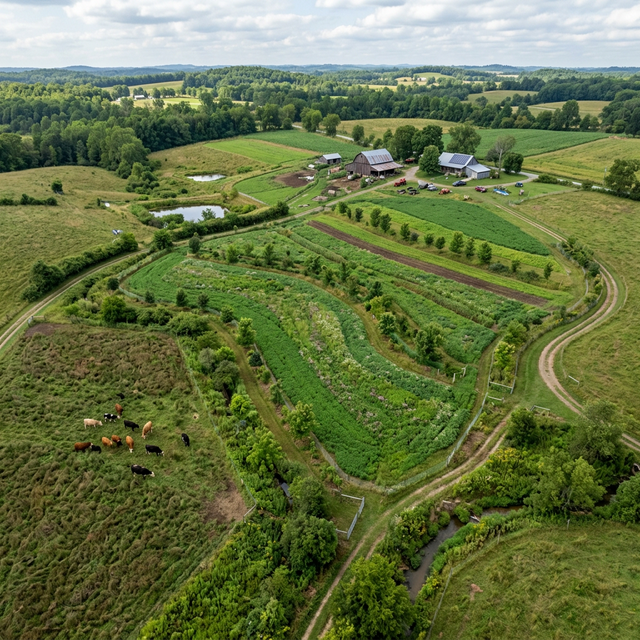
Over the past few years, "carbon farming" has dominated agricultural headlines. The promise is incredibly appealing: get paid by major corporations to improve your soil, plant trees, and trap atmospheric CO2 in your land. It sounds like a perfect win-win for landowners and the environment.
But as the voluntary carbon markets mature in 2026, a stark reality has emerged: the carbon market was largely built for 5,000-acre mega-farms and massive timber corporations. If you own a 30-acre hobby farm, a small woodlot, or a diversified homestead, participating in carbon offset programs involves significant hurdles.
Why is it so important to set realistic expectations? Because aggressive carbon aggregators often promise small acreage owners massive payouts, trapping them in decade-long contracts that yield very few actual dollars once testing and verification fees are subtracted. In this article, we cut through the hype and explain exactly what carbon farming looks like for the 10- to 50-acre landowner in 2026.
1. How the Carbon Market Works (Briefly)
The basic mechanism is simple: you change a land management practice to sequester (trap) more carbon in your soil or trees than you did previously. A third-party company verifies this "additional" carbon, turns it into a "carbon credit" (typically equal to 1 metric ton of CO2), and sells it to a corporation looking to offset its emissions.
The Hurdle of "Additionality"
Carbon markets pay for new carbon storage. If you have been practicing no-till farming or rotational grazing for 20 years, your soil is likely already healthy and saturated with carbon. Paradoxically, you often cannot get paid for what you are already doing; markets only pay for new interventions that increase carbon starting today.
2. The Financial Reality for Small Acreage
The Problem of Scale
The primary issue for small landowners is the high cost of verification. Measuring soil organic carbon requires taking deep soil cores and sending them to a lab. On a 2,000-acre corn farm, the cost of these tests is spread thinly over thousands of generated carbon credits. On a 30-acre pasture, the testing and administrative fees can easily eclipse the total value of the carbon credits generated.
Typical Payouts in 2026
Currently, agricultural carbon credits hover between $15 and $40 per metric ton.
- Through excellent regenerative practices (like converting degraded cropland to permanent pasture), an acre might sequester 0.5 to 1.5 metric tons of new carbon per year.
- The Math: If you sequester 1 ton per acre on 30 acres at $25/ton, your gross revenue is $750 a year. After aggregator fees, you might bring home $400.
For 30 acres, you are not paying off your mortgage with carbon credits. The income should be viewed as a modest bonus to offset the cost of buying cover crop seed or improving pasture fencing.
3. Practices That Actually Sequester Carbon
If the financial payouts are currently low, why do it? Because the practices required to sequester carbon are the exact same practices that make your land incredibly resilient, reduce your fertilizer costs, and allow your soil to hold massive amounts of water during droughts. The "carbon" is just a side effect of excellent land management.
To physically trap carbon, you must focus on roots and minimizing disturbance.
1. Converting Cropland to Permanent Perennials
The absolute best way to sequester carbon is to stop tilling the soil and plant deep-rooted perennial grasses, legumes, or trees. Transforming an old, degraded cornfield into a diverse pasture locks carbon deep underground where microbes turn it into stable humus.
2. Silvopasture and Agroforestry
Integrating trees into pasture systems (silvopasture) provides a massive carbon sink. You sequester carbon in the woody biomass of the trees and in the undisturbed pasture soil below them.
3. High-Density Rotational Grazing
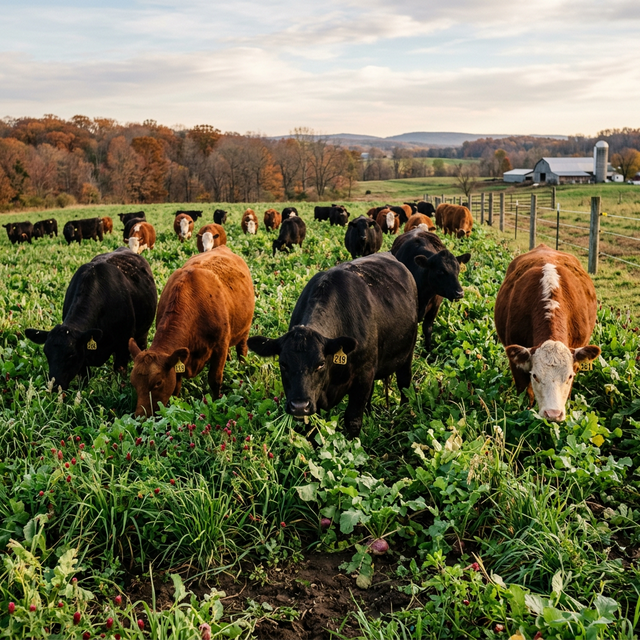
Moving livestock frequently prevents overgrazing, allowing grass roots to dive deeper. Every time a plant is grazed, it sloughs off a portion of its roots to balance its mass, feeding soil biology and directly pumping liquid carbon into the soil profile.
4. Continuous Cover Cropping
If you must grow annual crops, never let the soil sit bare. Planting multi-species cover crops after cash crop harvest ensures there are living roots pumping carbon into the soil 365 days a year.
4. How Small Landowners Should Engage
If you have less than 50 acres, do not bother engaging directly with corporate carbon credit aggregators. Instead, look for programs designed specifically to subsidize your transition to regenerative practices.
Focus on Cost-Share, Not Credits
Instead of trying to sell a few tons of carbon on the private market, apply for USDA NRCS programs. The Environmental Quality Incentives Program (EQIP) and the Conservation Stewardship Program (CSP) explicitly pay landowners to adopt carbon-sequestering practices.
- The NRCS will pay you per acre to plant cover crops, install rotational grazing fencing, or plant trees.
- These payments are often far more lucrative for small landowners than private carbon markets and don't tie you into complex, 10-year corporate liability contracts.
Join "Practice-Based" Programs
Some newer initiatives recognize the scaling problem and have shifted from "outcomes-based" models (which require expensive soil testing) to "practice-based" models. In these programs, you are paid a flat fee per acre simply for proving you planted a cover crop or reduced tillage, verified easily via satellite imagery.
5. Summary and Next Steps
Carbon farming on small acreage will not make you rich in 2026. However, the regenerative practices at the heart of carbon farming—minimizing tillage, maximizing root depth, and integrating animals—are essential for building a profitable, climate-resilient property.
Action Steps:
- Focus entirely on the soil health benefits of your practices; view any carbon market payouts as merely a fringe benefit.
- If you are starting a new regenerative practice, document a "baseline" soil test (testing for Soil Organic Matter) before you begin.
- Contact your local NRCS office to see if your planned improvements qualify for federal cost-share programs, which are currently the most reliable way to fund soil health improvements.
To learn more about implementing these practices, read our guide on Rotational Grazing for Beginners or explore Agroforestry Systems in our Forests & Woodlands section.
Sources & Further Reading
- USDA NRCS - Soil Health and Carbon Sequestration: nrcs.usda.gov
- Rodale Institute - Regenerative Agriculture and the Soil Carbon Solution: rodaleinstitute.org
- Purdue University Extension - Understanding Agricultural Carbon Markets: extension.purdue.edu
- Savory Institute - Holistic Management and Ecosystem Services: savory.global
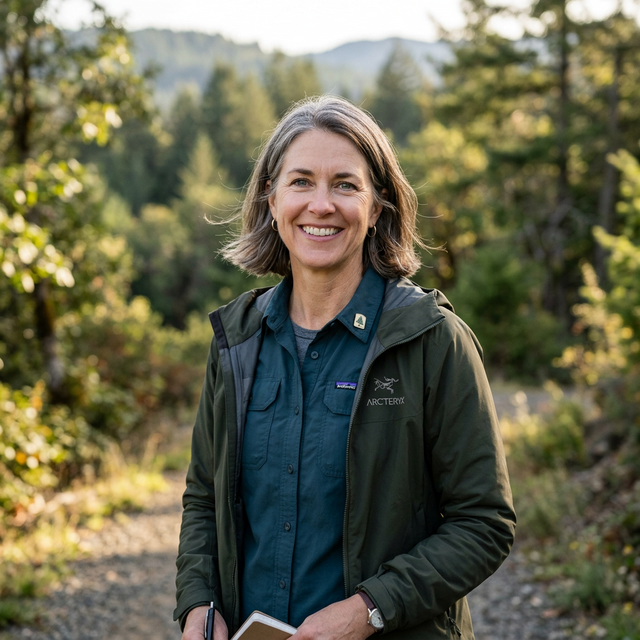
Written by Dr. Sarah Mitchell, Senior Editor & Land Management Specialist at LandHelp.info. Dr. Mitchell holds a Ph.D. in Natural Resource Management and focuses on helping landowners implement practical, economically viable regenerative agriculture systems.
Tags:
Dr. Sarah Mitchell
Senior Editor & Land Management Specialist
Dr. Mitchell has over 20 years of experience in natural resource management, with expertise in sustainable agriculture and forest stewardship. She holds a Ph.D. in Natural Resource Management from Colorado State University and has worked with the USDA NRCS for 15 years.