Best Free Online Courses for Private Land Stewardship in 2026
Discover the best free and low-cost online courses for private landowners in 2026. Learn about soil health, forestry, wildlife management, and prescribed burning from top universities.
Best Free Online Courses for Private Land Stewardship in 2026

Owning rural land is an incredible privilege, but it doesn't come with an instruction manual. Whether you just closed on 20 acres of overgrown timber or you're managing a 5th-generation family farm, the sheer volume of knowledge required—from identifying invasive species to understanding complex soil chemistry—can be overwhelming.
Fortunately, 2026 offers an unprecedented wealth of high-quality, university-level education entirely online. You no longer have to blindly trust the guy at the feed store to tell you how to manage your property.
Here is a curated list of the absolute best, most practical free (and low-cost) online courses and training programs for private landowners.
1. The University Extension Network (Your Best Resource)
The Cooperative Extension System operates through your state's Land-Grant University (e.g., Texas A&M, Penn State, University of Missouri, Cornell). Their specific mandate is to provide scientific, practical education to the public.
While you should always seek out your specific state's extension website for local climate data, these national heavyweights offer online courses that apply anywhere:
Penn State Extension — "Woodland Stewardship"
Penn State arguably has the most robust online forestry catalog in the country.
- Topics: Identifying trees, timber stand improvement, managing woods for wildlife, and how to sell timber without getting ripped off.
- Cost: Many introductory modules are free; comprehensive deeper-dive certificates range from $30 to $100.
- Link: extension.psu.edu/forests-and-wildlife
Texas A&M AgriLife — "Private Land Management"
Heavy focus on the South, Midwest, and arid rangelands.
- Topics: Quail habitat management, feral hog trapping techniques, pond weed identification, and livestock grazing strategies.
- Cost: Dozens of free, 1-hour recorded webinars and highly affordable online certification courses.
- Link: agrilifeextension.tamu.edu
2. Soil Health and Regenerative Agriculture
If your primary goal is building topsoil, cutting fertilizer costs, and drought-proofing your land, you must move beyond traditional agronomy and study soil biology.
Understanding Ag — "Regen Ag 101"
Founded by pioneers of the regenerative movement (Gabe Brown, Ray Archuleta), Understanding Ag is the premier educational outfit for soil health.
- The Course: Regen Ag 101. It covers the 6 principles of soil health, adaptive grazing, cover cropping, and the biology of the "soil sponge."
- Why take it: It fundamentally rewires how you view dirt. You will stop buying synthetic fertilizer after taking this course.
- Cost: $350 (highly worth the investment for the massive cost savings it generates).
- Link: understandingag.com/regen-ag-101/
SARE (Sustainable Agriculture Research and Education)
Funded by the USDA, SARE offers massive, free digital libraries of books and training modules.
- The Course: They offer free, interactive online courses on cover crop management and building soils for better crops.
- Cost: 100% Free.
- Link: sare.org/resources/
3. Wildlife Habitat and Prescribed Fire
Managing for target species (deer, turkey, quail) or non-game pollinators requires specific structural habitat knowledge.
National Deer Association (NDA) — "Deer Steward" Courses
If you own hunting land, this is mandatory education.
- The Course: Deer Steward Level 1. It covers deer biology, habitat management (food plots, timber stands), herd monitoring, and hunter management.
- Why take it: It stops you from making the classic mistake of planting expensive food plots while ignoring the critical need for bedding cover.
- Cost: ~$250
- Link: deerassociation.com/steward
eFIRE (e-Learning for Prescribed Fire)
If you intend to use prescribed burning to manage brush and wildlife habitat, you must understand fire behavior and safety.
- The Course: Developed by a consortium of Southern universities, eFIRE is an interactive, multimedia baseline training course on fire weather, burn plans, and ignition techniques.
- Cost: Free. (Note: This does not legally certify you to burn in your state; it is for educational baseline knowledge only).
- Link: campus.extension.org/enrol/index.php?id=1412
4. The Master Naturalist Program
If you want a comprehensive, deeply localized education on every aspect of your local ecosystem, this is the gold standard.
Almost every state sponsors a Master Naturalist Program (usually jointly administered by the state wildlife agency and the university extension office).
- The Setup: Historically an in-person, 40-hour classroom and field course, many state chapters have moved the core curriculum to a hybrid or fully online model post-2020.
- The Education: You will learn local geology, hydrology, native plant identification, ornithology (birds), and conservation ecology from actual university professors and state biologists.
- The Catch: It requires a commitment. Graduates must volunteer a specific number of hours annually (building trails, leading bird walks, etc.) to maintain their "Master" certification.
Search "Master Naturalist Program [Your State]" to find your local chapter's application window.
5. YouTube: The Free Visual Classroom
While structured courses are excellent, sometimes you just need to see exactly "how to hinge-cut a tree" or "how to install an electric fence." YouTube is unmatched for practical tutorials.
Must-Subscribe Channels for Landowners:
- GrowingDeer.tv (Dr. Grant Woods): The absolute masterclass in using regenerative agriculture (the Buffalo System) to grow massive deer and improve soil simultaneously.
- Greg Judy Regenerative Rancher: If you want to raise livestock, Greg teaches high-density rotational grazing, fencing, and water systems with ruthless, practical efficiency. No tractors allowed.
- Purdue Extension Forestry and Natural Resources: Endless, highly detailed videos on identifying specific invasive plants, timber volume estimation, and woodland wildlife management.
Summary
The best investment you will ever make on your land is not a new tractor; it is the education of the person operating it. Before you spend thousands of dollars on heavy equipment, chemicals, or seeds, dedicate a winter to completing a few of these online courses. Understanding the ecology, soil chemistry, and wildlife patterns of your property will save you decades of frustrating, expensive trial and error.
Explore more: Want to put this education into practice? Start by drafting your own 5-Year Land Management Plan using our free template, or learn how USDA EQIP funding can pay for the improvements you just learned about.
Sources & Further Reading
- Understanding Ag — Educational Courses: understandingag.com
- Penn State Extension — Online Forestry Courses: extension.psu.edu
- National Deer Association — Deer Steward Programs: deerassociation.com
- Sustainable Agriculture Research and Education (SARE): sare.org
- The Master Naturalist Program Roster (Find Your State): masternaturalist.org
Written by Maria Rodriguez, Wildlife Biologist & Conservation Programs Advisor at LandHelp.info. Maria frequently designs online curriculum for rural landowners and teaches continuing education seminars on federal conservation access.
Tags:
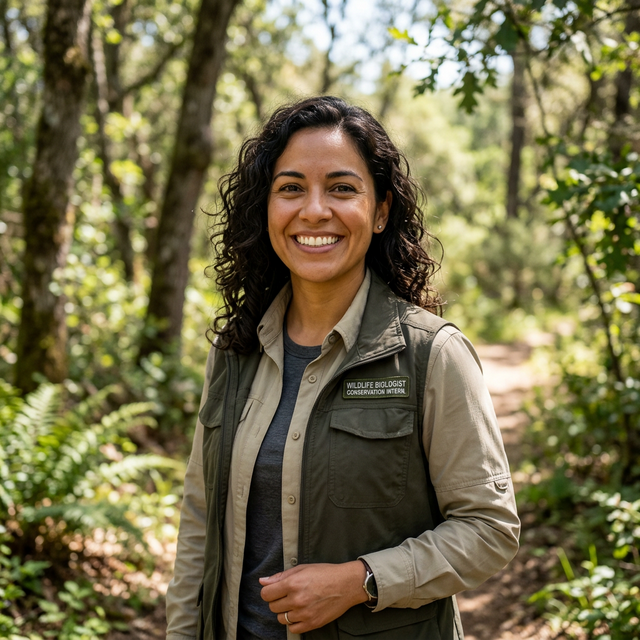
Maria Rodriguez
Wildlife Biologist & Conservation Programs Advisor
Maria specializes in wildlife habitat improvement and navigating conservation incentive programs. She has helped hundreds of landowners access NRCS programs and improve habitat on their properties.