How to Sell Standing Timber in 2026: Current Market Tips & Contract Checklist
A complete guide for private landowners on selling standing timber in 2026. Learn how to work with consulting foresters, understand timber contracts, and maximize harvest value.
How to Sell Standing Timber in 2026: Current Market Tips & Contract Checklist
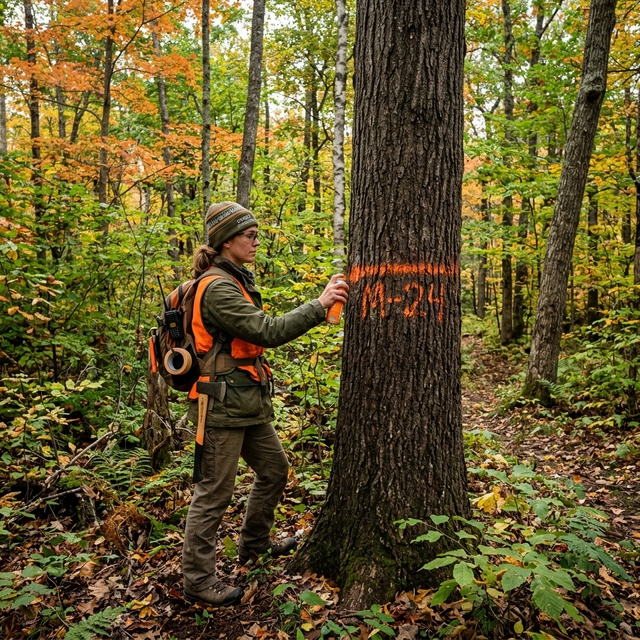
For many private landowners, a timber harvest is a once-in-a-lifetime financial event. Depending on the acreage and species, a mature hardwood stand can yield tens or even hundreds of thousands of dollars. However, the timber market is complex, highly localized, and notoriously opaque. In 2026, navigating this market without professional guidance is a recipe for ecological damage and financial loss.
Why is it so crucial to approach a timber sale strategically? Because standing timber is not like selling grain or cattle. There is no daily ticker tape showing the exact price of an overgrown white oak on a 15% slope in your specific county. If you simply accept the first unsolicited offer from a logger who knocks on your door, you are almost certainly leaving money on the table—and risking the long-term health of your woods.
In this comprehensive guide, we walk you through the modern process of selling standing timber, from hiring the right professionals to drafting an ironclad logging contract.
1. Do Not Sell Timber Without a Consulting Forester
The single biggest mistake a landowner can make is negotiating directly with a timber buyer or logger without representation. A timber buyer's job is to secure the wood for the sawmill at the lowest possible price. A logger’s job is to extract the wood efficiently.
You need a Consulting Forester.
A consulting forester works exclusively for you (the landowner) for a fee or a percentage of the sale (typically 8–10%). Their job is to maximize your profit and ensure the harvest aligns with your long-term ecological goals. According to research from several University Extension services, landowners who use a consulting forester historically receive 20% to 50% more money for their timber, even after paying the forester's fee.
What the Consulting Forester Handles
- Inventory (Cruising): They identify exactly which trees should be cut and estimate the total board feet and grade of the timber.
- Marking: They paint the specific trees to be cut at eye level and at the stump (to ensure only marked trees are taken).
- Marketing: They send invitations to bid on the timber to multiple reputable, bonded buyers in the region.
- Oversight: They monitor the logging operation to ensure the contract is followed and water quality standards are met.
2. Navigating the 2026 Timber Market
The timber market has evolved significantly since the supply chain disruptions of the early 2020s.
High-Value vs. Low-Value Wood
- Veneer and Grade Hardwoods: White oak, black walnut, and high-quality hard maple remain the undisputed kings of the market. Demand for tight-grained white oak (driven globally by the bourbon and wine barrel industries) continues to command premium prices.
- Softwoods and Pulp: The market for pine, spruce, and low-grade pulpwood remains highly volatile and geographically dependent. In areas where paper mills have closed, getting a logger to even bid on a pine thinning can be challenging unless it is bundled with higher-value wood.
Carbon Market Overlap
In 2026, if your property is enrolled in a carbon offset program (which usually restricts heavy harvesting for 10-40 years), selling timber becomes legally complicated. Ensure your consulting forester reviews any existing carbon contracts before marking a tree.
3. The Timber Sale Contract: Your Ultimate Protection
Never let a logger cut a tree based on a handshake or a one-page generic agreement provided by the buyer. A robust timber sale contract protects your property from severe damage and ensures you get paid.
The Landowner's Contract Checklist
Every timber contract in 2026 must include:
- Description of Timber: Explicitly state what is being sold (e.g., "Only trees marked with blue paint by the consulting forester").
- Payment Terms: The safest method is the Lump-Sum Sale in Advance. The buyer pays you the entire agreed-upon amount before the first chainsaw starts. Avoid "pay-as-cut" (yield) sales unless tightly monitored, as they require tracking every log that leaves your property.
- Time Limit: Specify exactly when cutting can begin and the absolute deadline for completion and equipment removal (usually 12 to 18 months).
- Best Management Practices (BMPs): The contract must legally bind the logger to follow state forestry BMPs to protect streams, wetlands, and soil.
- Performance Bond: Always require the buyer to post a performance bond (a cash deposit held in escrow, often $2,000–$5,000). This money is used to repair deep ruts, fix damaged fences, or re-grade logging roads if the logger fails to do so upon exit. If they leave the property in good shape, they get the bond back.
- Liability Insurance: Require written proof of the logger's Worker’s Compensation and General Commercial Liability insurance.
- Weather Clauses: The contract must state that the landowner or consulting forester has the unilateral right to shut down logging operations during excessively wet periods to prevent severe soil rutting.
4. Taxes on Timber Income
Timber income is subject to strict IRS rules, but treating it correctly can save you thousands.
- Capital Gains Treatment: In most cases, if you have owned the timber for more than one year, the income qualifies as a long-term capital gain, which is taxed at a significantly lower rate than ordinary income.
- Depletion Allowance: You are not taxed on the entire gross sale. When you bought the property, a portion of the purchase price was inherently tied to the value of the timber standing on it (the "basis"). A forester or specialized CPA can help you deduct this timber basis from your gross sale proceeds (called depletion) to lower your tax burden.
5. Summary and Next Steps
Selling timber is an irrevocable decision that will alter the look and ecology of your woods for decades. Maximize your financial return and protect your property by hiring professional representation and utilizing a competitive bidding process.
Action Steps:
- Do not respond to unsolicited offers from buyers who stop by or mail you letters.
- Search the Association of Consulting Foresters (ACF) directory or contact your state’s forestry department for a list of certified consulting foresters in your county.
- Invite 2-3 consulting foresters to walk your property (usually free for the initial consultation) to discuss your goals.
For more information on managing post-harvest woods, read our guide on Coppicing and Pollarding or explore habitat creation in our Wildlife & Habitat section.
Sources & Further Reading
- Association of Consulting Foresters (ACF) - Find a Forester Directory: acf-foresters.org
- USDA Forest Service - National Timber Tax Website: timbertax.org
- Penn State Extension - Selling Timber: What the Landowner Needs to Know: extension.psu.edu
- University of Maryland Extension - Sample Timber Sale Contract: extension.umd.edu
Written by Dr. Sarah Mitchell, Senior Editor & Land Management Specialist at LandHelp.info. Dr. Mitchell holds a Ph.D. in Natural Resource Management from Colorado State University and has advised hundreds of landowners on sustainable timber harvests.
Tags:

Dr. Sarah Mitchell
Senior Editor & Land Management Specialist
Dr. Mitchell has over 20 years of experience in natural resource management, with expertise in sustainable agriculture and forest stewardship. She holds a Ph.D. in Natural Resource Management from Colorado State University and has worked with the USDA NRCS for 15 years.
You Might Also Like


Related Resources
External tools, guides, and references related to this topic
Silviculture Guide to Species
Detailed silvicultural guides for major North American tree species. Covers regeneration, growth, and management of various forest types.
Forest Carbon Credits 101
Comprehensive guide to forest carbon credit programs. Learn how to enroll your forest land, measure carbon sequestration, and sell carbon credits.
Agroforestry Practices
Technical guides for implementing agroforestry systems including alley cropping, silvopasture, windbreaks, and forest farming.
Tree Planting Calculator
Calculate spacing, number of trees needed, and costs for reforestation projects. Includes species-specific recommendations.