How to Legally and Safely Offer Paid Wildlife Photography Access on Your Land
Learn how to turn your private land into a profitable wildlife photography destination. A complete guide to blind setup, legal liability, and habitat management.
How to Legally and Safely Offer Paid Wildlife Photography Access on Your Land
For decades, private landowners have generated supplemental income by leasing their property for hunting. But as the demographics of outdoor recreation shift in 2026, a new, highly profitable market has emerged: paid wildlife photography access.
With the explosive growth of digital photography and birding, enthusiastic photographers are willing to pay premium daily rates for exclusive access to well-managed habitats. For landowners, this offers a non-consumptive, low-impact way to monetize their conservation efforts. However, welcoming the public onto your property comes with specific logistical, ecological, and legal challenges.
Why is this important? Because diversifying your land's income streams allows you to fund further conservation projects, pay property taxes, and keep the land in your family—all without harvesting timber or relying solely on agriculture. In this comprehensive guide, we will break down exactly how to set up, manage, and legally protect a wildlife photography enterprise on your property.
1. Understanding the Photography Business Model
Wildlife photographers have different needs than hunters. While a hunter might spend all day walking a property, a photographer is typically stationary, waiting for the perfect lighting and behavioral moments.
Day Leases vs. Seasonal Memberships
- Daily Blind Rentals: Charge a flat fee (often $100–$300 per day, depending on the species and setup) for exclusive use of a pre-established photography blind.
- Guided Access: Offer a premium service where you act as a guide, driving photographers to active leks, nesting sites, or feeding areas.
- Annual Memberships: Similar to a hunting club, a small group of photographers pays an annual fee for year-round access, which guarantees you stable income.
What Photographers Are Looking For
Photographers are obsessed with three things: backgrounds, lighting, and predictability. They want clean, unobstructed views of wildlife with the sun behind them (front-lighting the animal) during the "golden hours" of early morning and late evening.
2. Habitat and Blind Setup
You don’t need 1,000 acres to run a successful photography business. A well-managed 10-acre parcel with a water feature can be incredibly productive.
Building the Perfect Photography Blind
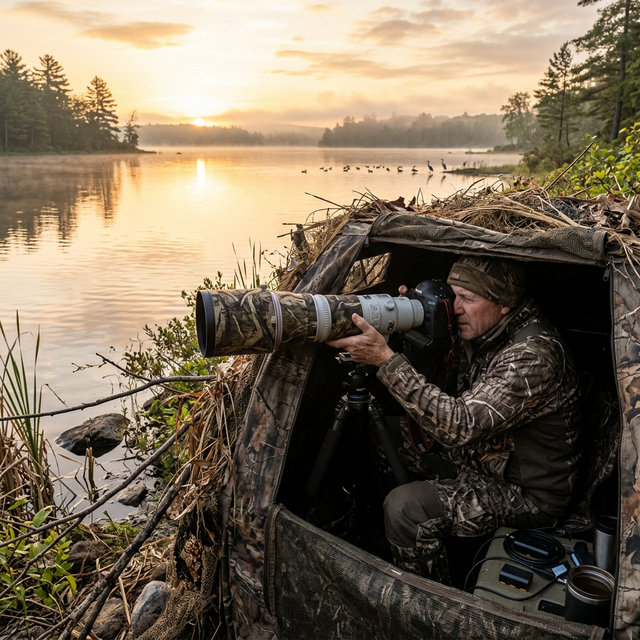
Unlike hunting blinds, which are elevated, the best photography blinds are at eye level with the subject.
- Water-level blinds: For waterfowl and shorebirds, dig a pit blind or use a floating blind so the camera lens is just inches above the water. This provides the coveted low-angle perspective.
- Songbird setups: Create a "staging branch" near a water drip or feeding station. Ensure the background behind the branch is distant and uncluttered (to create a smooth, blurry background known as bokeh).
- Comfort: Photographers sit for 8-10 hours. Provide comfortable seating, ample room for tripods, and "lens ports" that allow movement without being seen.
Ethical Habitat Baiting and Feeding
Always check your state's wildlife agency regulations regarding feeding wildlife. If legal, providing supplemental native food sources or water drips is the fastest way to attract subjects. However, focus on habitat enhancement first. According to the USDA Natural Resources Conservation Service (NRCS), planting native fruit-bearing shrubs (like elderberry or serviceberry) provides a natural, sustainable attractant that photographers prefer over artificial feeders.
3. Legal and Liability Considerations
This is the most critical aspect of opening your land to the public. Do not skip this step.
Recreational Use Statutes (RUS)
Almost all 50 states have Recreational Use Statutes designed to protect landowners from liability when they open their land for free recreational use. However, the moment you charge a fee for access, you generally lose this statutory protection.
Once money changes hands, the photographer becomes an "invitee," meaning you owe them the highest duty of care under the law to ensure the premises are reasonably safe.
How to Protect Yourself
- Commercial Liability Insurance: Your standard farm or homeowner’s policy will not cover commercial agritourism or fee-based recreation. You must purchase a specific hunting lease or outdoor recreation liability policy. These typically cost a few hundred dollars a year and provide $1M–$2M in coverage.
- Ironclad Waivers: Have every visitor sign a "Release of Liability and Assumption of Risk" form. The form should explicitly list potential hazards (e.g., venomous snakes, uneven terrain, falling branches, extreme weather). Have a local attorney draft this—do not just download a generic one from the internet.
- Business Structure: Consider establishing a Limited Liability Company (LLC) solely for your photography business to separate your personal assets from the business.
- Clear Rules: Provide a printed sheet of rules restricting where guests can walk, prohibiting smoking, and outlining ethical wildlife rules (no flushing resting birds, no approaching active nests).
4. Marketing Your Photography Destination
Finding your first clients is easier than ever thanks to social media.
- Facebook Groups: Join regional birding and wildlife photography groups. Post high-quality photos taken from your blinds and mention that daily rentals are available.
- Audubon Societies: Reach out to local birding clubs. Offer to host a field trip to build word-of-mouth reputation.
- Website and SEO: Create a simple landing page showcasing your setups, the species available by season, and your pricing. Use clear keywords like "wildlife photography blinds for rent in [Your State]."
5. Summary and Next Steps
Offering paid wildlife photography access is an excellent way to cover property taxes and fund conservation efforts. By focusing on low-angle photography blinds, understanding lighting, and strictly managing your liability, you can create a sustainable, non-consumptive income stream.
Action Steps to Take This Week:
- Identify 1-2 locations on your property with good morning light and active wildlife.
- Call your insurance agent to discuss commercial recreation riders.
- Review your state's wildlife feeding and baiting laws.
Want to learn more about improving the habitat that will attract these photographers? Check out our guide on Creating Pollinator Habitat with Native Plants or explore funding options through NRCS Conservation Programs.
Sources & Further Reading
- USDA NRCS - Wildlife Habitat Incentives Program and Resources: nrcs.usda.gov
- National Agricultural Law Center - Recreational Use Statutes Overview: nationalaglawcenter.org
- Audubon Society - Ethical Bird Photography Guidelines: audubon.org
- University of Florida IFAS Extension - Agritourism on Private Lands: edis.ifas.ufl.edu
Written by Maria Rodriguez, Wildlife Biologist & Conservation Programs Advisor at LandHelp.info. Maria specializes in wildlife habitat improvement and agritourism, helping hundreds of landowners diversify their income while protecting natural resources.
Tags:
Maria Rodriguez
Wildlife Biologist & Conservation Programs Advisor
Maria specializes in wildlife habitat improvement and navigating conservation incentive programs. She has helped hundreds of landowners access NRCS programs and improve habitat on their properties.