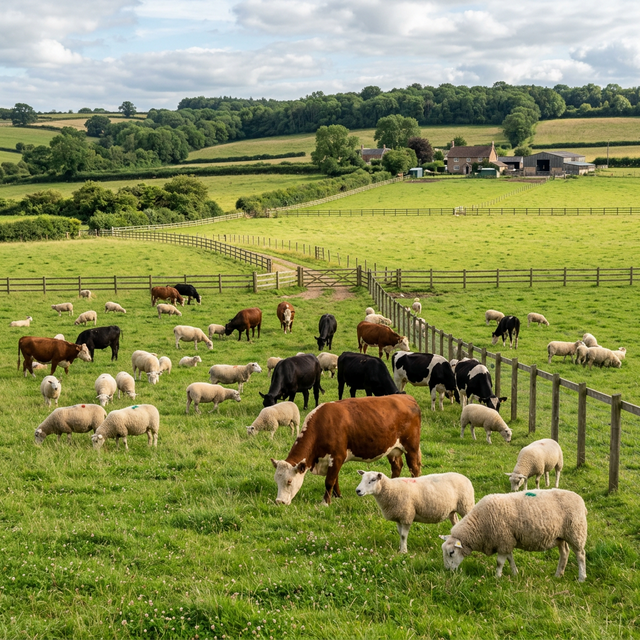
Improving Soil Health with Cover Crops in Pastures
Discover how to use cover crops in existing pastures to improve soil health, reduce compaction, and extend your grazing season. Practical guide for private landowners and small farms.
Improving Soil Health with Cover Crops in Pastures
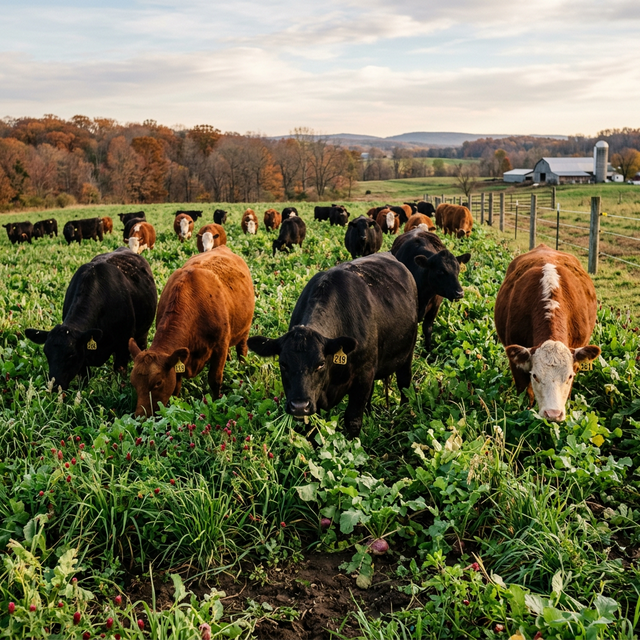
When we talk about cover crops, we usually picture them on large-scale row crop farms — planted after the corn or soybean harvest to protect bare winter soil. But one of the fastest-growing trends in regenerative agriculture is integrating cover crops directly into perennial pastures.
Why? Because even established pastures can suffer from severe compaction, declining organic matter, and "summer slump" (when cool-season grasses stop growing in July and August).
Strategic use of pasture cover crops can break up hardpan soils, fix free nitrogen from the atmosphere, and provide high-quality forage exactly when your regular grasses shut down. Here’s how small-farm landowners can make it work.
The Problem: Why Do Perennial Pastures Need Cover Crops?
In a perfect world, a diverse perennial pasture wouldn't need cover crops. But most modern pastures are:
- Species-poor: Dominated by just 1 or 2 grasses (like tall fescue or bermudagrass)
- Compacted: Decades of livestock hoof traffic and tractor use create a hardpan 4–8 inches below the surface
- Nitrogen-dependent: They require expensive annual fertilizer inputs to maintain yield
- Seasonally limited: They go dormant during extreme heat or early winter, forcing landowners to buy expensive hay
Inter-seeding or drilling cover crops into these pastures introduces biological diversity that solves these physical and chemical problems naturally.
4 Ways Cover Crops Transform Pasture Soil
1. Breaking up compaction without a plow
Tillage destroys soil structure and fungal networks. Instead of ripping compacted pastures with a subsoiler, use "biological tillage." Plants like tillage radish (daikon) and turnips drive taproots several feet deep. When these roots die and rot over winter, they leave massive channels for water infiltration and earthworm habitat.
2. Fixing free nitrogen
Legumes — like clover, vetch, and winter peas — form symbiotic relationships with soil bacteria to pull nitrogen from the air and fix it into the soil. When these plants are grazed or die, that nitrogen becomes available to your primary pasture grasses, drastically reducing fertilizer needs.
3. Boosting soil biology
Soil microbes thrive on a diverse diet. A pasture that only grows fescue only feeds specific microbes. Adding a 5-species cover crop mix pumps different types of root exudates (liquid carbon) into the soil, exploding the microbial population. More microbes = faster nutrient cycling = healthier grass.
4. Weed suppression
Nature abhors bare soil. If your pasture has thin spots, weeds will fill them. Drilling a fast-growing cover crop like cereal rye or sorghum-sudangrass into weak pastures outcompetes weeds for sunlight and moisture.
The Best Cover Crops for Pasture Systems
Success depends on picking species that fill the gaps in your current system.
Cool-Season Mixes (Plant in late summer/early fall)
Goal: Extend grazing into winter, break compaction, fix spring nitrogen.
- Brassicas: Tillage radish, purple top turnip, rape (excellent for compaction; highly digestible forage)
- Small grains: Cereal rye, oats, triticale (massive fibrous roots for building organic matter; great early spring grazing)
- Legumes: Crimson clover, hairy vetch, winter peas (nitrogen fixers)
Warm-Season Mixes (Plant in late spring/early summer)
Goal: Provide forage during the "summer slump," outcompete summer weeds.
- Grasses: Sorghum-sudangrass, pearl millet, teff (massive biomass producers; drought tolerant)
- Broadleaves: Buckwheat (makes phosphorus available; attracts pollinators)
- Legumes: Cowpeas, sunn hemp (excellent summer nitrogen fixers)
How to Establish Cover Crops in Existing Pasture
This is the tricky part. You can't just throw seed on thick, established grass and expect it to grow. The existing grass will outcompete the new seedlings. You have to create an opportunity.
Here are the three best methods for small farms:
Method 1: The "Graze-Down" and No-Till Drill (Best Results)
- Intensively graze the existing pasture down to 2–3 inches (one of the rare times you want to overgraze).
- Use a no-till drill to plant the cover crop seed directly into the sod.
- The heavy grazing suppresses the existing grass long enough for the cover crop seedlings to emerge and compete.
Note: Many local Soil and Water Conservation Districts rent no-till drills to landowners for as little as $10–$15 per acre.
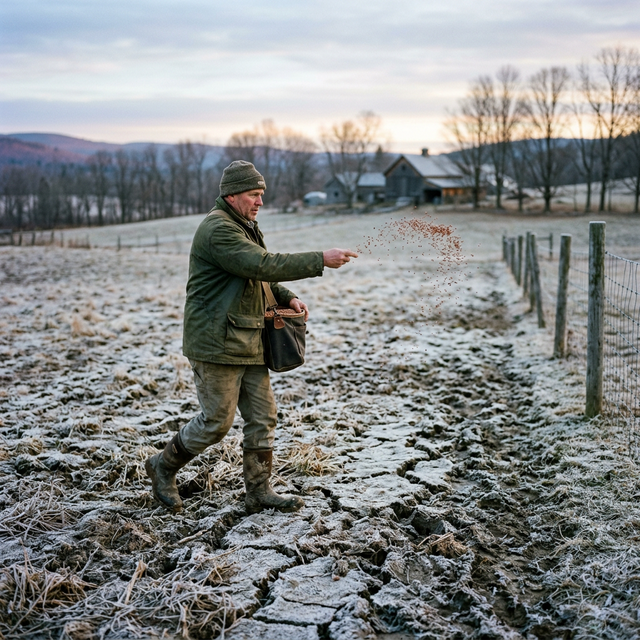
Method 2: Frost Seeding (Easiest, Lowest Cost)
Best for: Clovers and small-seeded brassicas.
- In late winter (February/March), broadcast seed over the pasture while the ground is frozen.
- The natural freeze-thaw cycles of the freeze "honeycomb" the soil, drawing the small seeds down into the dirt for perfect seed-to-soil contact.
- As the ground warms, the seeds germinate before the existing grass fully wakes up.
Method 3: Bale Grazing (The "Hoof-and-Tooth" Method)
- Broadcast seed over a specific pasture area.
- Unroll hay over the seeded area and let cattle feed on it.
- The cattle's hooves press the seed into the soil, their manure fertilizes it, and the waste hay acts as a protective mulch.
Using Cover Crops for "Bale Grazing" and Winter Forage
Perhaps the biggest financial benefit of pasture cover crops is reducing winter hay costs.
If you plant a cool-season mix (oats, rye, turnips, brassicas) in late August, it will produce massive tonnage by late November. Instead of feeding hay, you can use temporary electric fence to strip-graze this standing cover crop straight through December and January.
According to University of Missouri Extension data, grazing stockpiled forage and cover crops costs about one-third as much per day as feeding harvested hay.
Step-by-Step Plan for Your First Year
Don't overhaul your whole farm at once. Try this simple pilot project:
- Pick your weakest 2–5 acre pasture — the one with the most compaction or the thinnest stand.
- Graze it hard in mid-to-late August.
- Rent a no-till drill from your local conservation district.
- Drill a simple 3-way mix: 40 lbs Oats + 3 lbs Tillage Radish + 5 lbs Crimson Clover per acre.
- Keep livestock off until the oats are 8–10 inches tall (mid-to-late October).
- Strip graze it through the early winter.
By spring, you will see dramatically softer soil, fewer winter weeds, and a massive flush of nitrogen-fueled growth in your perennial grasses.
Funding and Technical Help
USDA Natural Resources Conservation Service (NRCS) heavily promotes cover crops. Through the EQIP program (Practice Standard 340), private landowners can receive cost-share payments that often cover 50–100% of the seed and planting costs for 1 to 3 years.
Contact your local NRCS service center before buying seed to see what financial and technical assistance is available in your county.
Summary
Cover crops aren't just for corn farmers anymore. By strategically drilling multi-species mixes into your existing pastures, you can break up compaction, fix free nitrogen, and drastically reduce your winter hay bill. Start small, use a no-till drill if possible, and let biological diversity do the heavy lifting of soil repair.
Explore more: Learn how to implement your new forage system with our guide on Rotational Grazing for Beginners, or browse more resources in our Rangeland & Pasture category.
Sources & Further Reading
- Sustainable Agriculture Research and Education (SARE) — Managing Cover Crops Profitably: sare.org
- USDA NRCS — Cover Crop Practice Standard (340): nrcs.usda.gov
- University of Missouri Extension — Extending the Grazing Season: extension.missouri.edu
- Penn State Extension — Cover Crops for Grazing: extension.psu.edu
- Understanding Ag — Regenerative Grazing Resources: understandingag.com
- Noble Research Institute — Cover Crops in Pasture Systems: noble.org
Written by Dr. Sarah Mitchell, Senior Editor & Land Management Specialist at LandHelp.info. Dr. Mitchell holds a Ph.D. in Natural Resource Management and has spent over 20 years helping landowners implement regenerative grazing and soil health practices.
Tags:
Dr. Sarah Mitchell
Senior Editor & Land Management Specialist
Dr. Mitchell has over 20 years of experience in natural resource management, with expertise in sustainable agriculture and forest stewardship. She holds a Ph.D. in Natural Resource Management from Colorado State University and has worked with the USDA NRCS for 15 years.